
How Traumatic Brain Injury Cases in Dallas Are Built and Why Standard Imaging Is Not the Starting Point
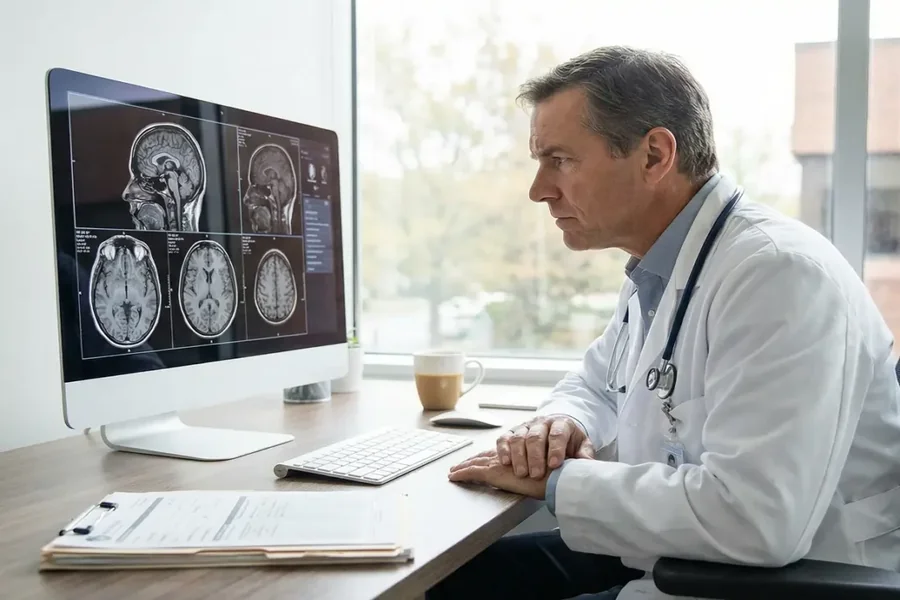
Traumatic brain injury claims in Dallas begin from a position of structural disadvantage that has nothing to do with the law and everything to do with how the injury presents medically. A broken leg shows on an X-ray. A fractured vertebra shows on a CT scan. The diffuse axonal injury that produces the cognitive and emotional symptoms of mild to moderate TBI shows on neither, which gives the at-fault driver’s insurer its most reliable early argument: the imaging was normal, therefore the injury is not serious.
That argument is medically uninformed, but it is effective when the injured person does not have the expert infrastructure to challenge it. A brain injury lawyer in Dallas approaches these cases by building the expert foundation that makes the imaging gap irrelevant, starting from the first weeks of representation rather than after the insurer’s position has already hardened around the clean scan narrative.
Why Standard Imaging Misses Most TBIs
CT scans and standard MRI sequences are designed to detect structural damage: bleeding, fractures, and mass lesions that require immediate surgical attention. They perform that function well. They do not detect the microscopic shearing of axonal connections that produces the memory problems, concentration deficits, processing slowness, and emotional dysregulation that characterize mild to moderate TBI. Advanced imaging, including diffusion tensor imaging that maps white matter tract integrity, can reveal this damage in ways that standard sequences cannot. Functional MRI that measures brain activity patterns provides another dimension of objective evidence. Neither is typically ordered in an emergency setting because neither changes the acute clinical management. Both become significant when the legal case requires objective documentation of an injury that standard imaging did not capture.
Neuropsychological Testing as the Clinical Bridge
A licensed neuropsychologist who administers a battery of standardized cognitive tests produces the functional evidence that bridges the gap between the clean scan and the real-world impairment. The assessment covers attention, working memory, processing speed, executive function, and emotional regulation, comparing the injured person’s performance to population norms and, where historical data exists, to their own pre-injury baseline. The results document the specific cognitive domains where the injury has produced measurable functional loss, in objective terms that require a substantive expert response from the insurer rather than a simple denial. This testing is one of the most important investments in any serious Dallas TBI case, and beginning it early rather than after the insurer’s position is established changes what the case looks like at the negotiation table.
Dallas’s Medical Infrastructure and What It Produces
Parkland Memorial Hospital, UT Southwestern Medical Center, and the trauma centers affiliated with Baylor Scott and White Health all serve seriously injured Dallas crash victims and produce medical records whose quality and specificity vary significantly. Neurological and neurosurgical records from a major academic medical center typically document injury findings and functional assessments with more specificity than records from a walk-in urgent care facility. The treating providers the injured person sees in the weeks after a TBI, and how thoroughly those providers document the cognitive and emotional symptoms, determines the quality of the medical record that the legal case is built on. Establishing care with a provider who has experience treating and documenting TBI for litigation purposes is a meaningful early decision.
How the Insurer’s Defense Works and How to Counter It
TBI defense strategies in Dallas follow a predictable sequence. The insurer argues the crash was not severe enough to produce a brain injury, points to the clean imaging, and attributes the reported symptoms to pre-existing anxiety, depression, or other conditions. Countering each argument requires specific expert preparation: a biomechanical expert who addresses the mechanism of injury, a neurologist who addresses the diagnosis, a neuropsychologist whose testing results document the functional impairment objectively, and a treating physician who can explain why the symptom presentation is consistent with TBI rather than with the alternative explanations the defense offers. The Brain Injury Association of America’s TBI resources document the clinical framework for TBI diagnosis and the long-term consequences that life care plans and damages cases in serious Dallas brain injury matters are built from.