
Customer Loyalty Program Strategies That Help Brands Stand Out in Saturated Markets
In most markets, products can be replicated, prices can be matched, and telling one brand apart from another is becoming harder and harder. What can truly differentiate a company from its competitors is the relationship it builds and sustains with its customers.
As acquisition costs continue to rise and consumers face an overwhelming number of choices, one of the most effective ways for a brand to stand out is through a customer loyalty program that strengthens emotional connections while increasing customer lifetime value.
By using data, AI, personalization, and experiential rewards to create programs that customers genuinely want to engage with, businesses can escape the perilous cycle of short-term transactions and focus on long-term engagement. Let’s see how that’s possible.
Loyalty Is a Strategic Growth Investment
According to the Antavo Global Customer Loyalty Report 2026, marketers now allocate 51.5% of their total marketing budgets to loyalty and CRM initiatives, reflecting the growing importance of nurturing the company’s customers over pure acquisition.
The report also found that 92.7% of loyalty program owners report a positive ROI, with an average return of 5.3x, while nearly 89% say their loyalty program creates value they would not otherwise achieve.
These findings show that loyalty programs are increasingly viewed as long-term profit drivers rather than promotional expenses or discount mechanisms. The competitive advantage comes from leveraging the relationships fostered by the program and using the data it generates to deliver better products, services, and customer experiences.
Move Beyond Points and Discounts
Consumers have become accustomed to earning points. While this is a standard, gamified, and proven strategy, points alone rarely create differentiation anymore. Modern loyalty strategies must reward a broader range of behaviors, including:
- Product reviews
- Referrals
- Community participation
- Educational content consumption
- Social engagement
- Sustainability initiatives
The same Antavo report shows that while discounts remain important, customers increasingly value personalized rewards, exclusive experiences, and recognition as indicators of a premium loyalty program. Brands that combine transactional rewards with emotional engagement are better positioned to create lasting customer relationships.
This shift allows brands to reinforce behaviors that support long-term business objectives instead of rewarding purchases alone. This is a big distinction: instead of rewarding an outcome, rewarding the behaviors that lead to it is much more likely to produce consistent results.
Personalization Has Become Table Stakes
One-size-fits-all loyalty programs struggle to maintain engagement. Even if a program has a high enrollment rate, the “quiet quitting” of its members will soon follow. The reason is that customers increasingly expect brands to recognize their individual preferences.
Artificial intelligence and customer data now allow companies to personalize:
- Reward recommendations
- Product suggestions
- Promotional timing
- Preferred communication channels
- Milestone celebrations
- Tier progression
Rather than sending identical offers to every member, leading brands continuously adapt the experience based on clusters of customer behavior.
The Antavo Global Customer Loyalty Report 2025 found that 55% of Gen Z and 53% of Millennials are more likely to join loyalty programs that use AI, highlighting how personalization has become a competitive expectation among younger consumers.
Important fact: the report also notes that ease of managing modern loyalty technology has become one of the most valued capabilities for organizations adopting new platforms.
Offer Experiences Instead of Transactions
The strongest customer loyalty programs create reasons for customers to remain engaged even when they are not actively making purchases.
Successful brands often introduce experiences such as:
- Early access to new products
- VIP communities
- Exclusive educational content
- Member-only events
- Gamified challenges
- Personalized achievements and milestones
These experiences increase emotional attachment while encouraging customers to interact with the brand more frequently throughout the year.
This approach also generates richer first-party data, allowing businesses to better understand customer preferences and continuously improve future interactions (and products or services).
Program Improvement Through Loyalty Data
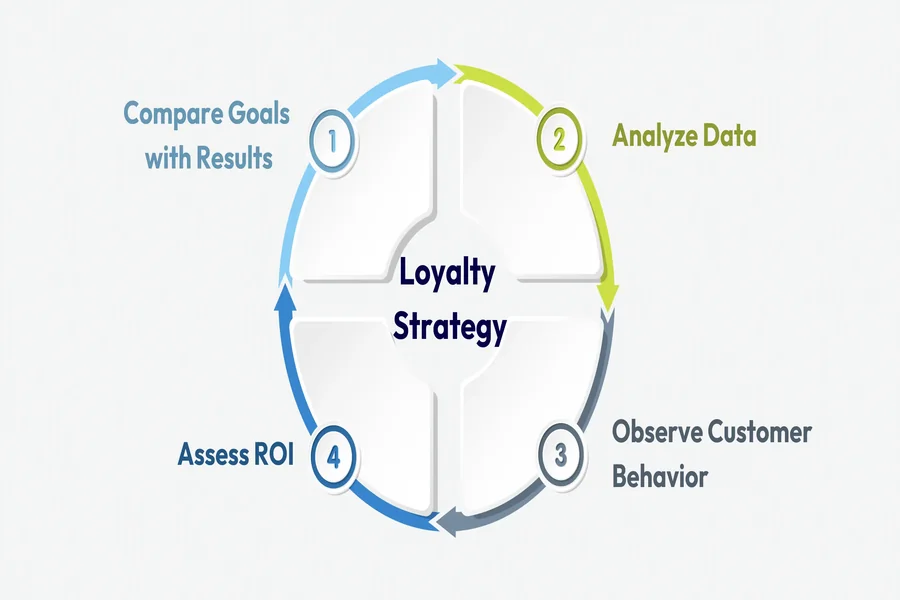
Launching a loyalty initiative is only the beginning. High-performing brands constantly analyze customer behavior to optimize program performance.
Useful metrics include:
- Repeat purchase rate
- Customer lifetime value
- Reward redemption rates
- Active member participation
- Tier progression
- Referral activity
- Churn reduction
The 2026 Antavo report found that although loyalty performance continues to improve globally, many organizations still face challenges analyzing their loyalty data effectively. Companies that transform this data into actionable insights are better positioned to refine rewards, improve customer experiences, and increase program profitability over time.
Technology as a Lever for Scale
As loyalty strategies become more sophisticated, technology plays an increasingly important role in automating personalized experiences across multiple channels.
Modern loyalty platforms can support:
- Real-time rewards
- Omnichannel engagement
- AI-assisted segmentation
- Flexible program rules
- Campaign automation
- Performance analytics
Solutions such as Fielo’s customer loyalty program enable organizations to build, manage, and optimize personalized loyalty initiatives with AI assistance while integrating customer data across sales, marketing, and service channels. Rather than treating loyalty as an isolated campaign, businesses can create connected experiences throughout the customer lifecycle.
Final Thoughts
Standing out in saturated markets requires far more than offering lower prices or larger discounts. Building something unique that competitors can’t replicate starts with creating genuine connections with customers.
It’s simple: people reward brands that recognize their preferences, deliver personalized experiences, and provide meaningful value beyond the transaction.
A modern customer loyalty program is one of the most direct ways to achieve that. It combines data, AI, behavioral incentives, and continuous optimization to strengthen those relationships while generating measurable business results.