
How Pretty Am Understanding Beauty Standards, Facial Features, and Self-Confidence
Have you ever wondered, “How pretty am I?” Looking in the mirror, taking selfies, and comparing photographs can leave you with surprisingly different impressions of your appearance.
AI beauty tests offer another way to explore your facial features. Facefy analyzes visible facial proportions, symmetry, and structural characteristics to provide an appearance-based assessment from a photograph.
But what does a beauty score actually tell you? This guide explains how AI attractiveness tests work, how beauty standards influence perceptions, and how to use facial analysis for self-discovery without letting a number define your appearance.
How Pretty Am I? Understanding AI Beauty Scores
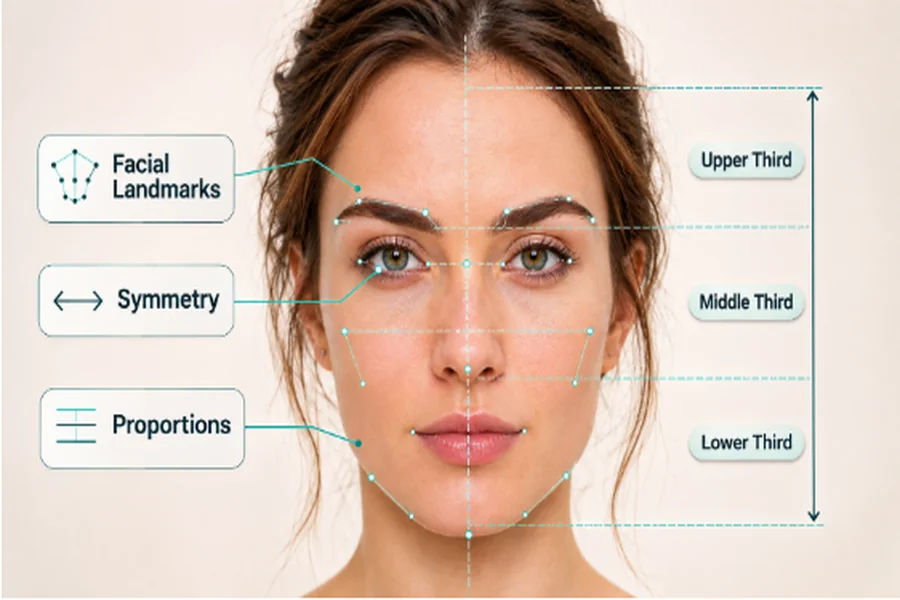
An AI beauty test estimates facial attractiveness using characteristics such as facial symmetry, feature spacing, facial proportions, and overall balance.
Unlike asking someone for their personal opinion, an AI face analyzer evaluates your photograph against predefined analytical criteria. However, these criteria still reflect particular assumptions about facial aesthetics.
There is no universally accepted average attractiveness score or scientific scale that determines how pretty someone is. Different platforms may evaluate the same photograph differently because they use different scoring methods.
A beauty score is best understood as an AI-generated assessment of visible facial characteristics rather than an objective measurement of attractiveness.
How Facefy’s “How Pretty Am I” Test Works
Facefy uses AI-powered facial analysis to examine structural characteristics visible in a photograph, helping users explore the individual features that contribute to their appearance.
For anyone curious about their facial proportions, Facefy’s How Pretty Am I test offers a convenient starting point for exploring appearance-based assessments through AI.
Using Facefy’s AI face analysis platform, you can also explore individual facial characteristics beyond an overall beauty rating.
AI facial analysis generally involves several processes:
- Facial landmark detection: Identifying reference points around the eyes, nose, lips, cheekbones, and jawline.
- Symmetry analysis: Comparing corresponding features on both sides of the face.
- Facial thirds assessment: Examining the relative lengths of different facial regions.
- Proportion analysis: Evaluating relationships between facial features.
- Results generation: Presenting an estimated appearance assessment.
These measurements provide a structured perspective on facial appearance without determining how attractive everyone else will find you.
Step-by-Step: How to Check How Pretty You Are With AI
1. Select a Clear Photograph
Choose a recent photograph showing your entire face. Avoid heavy filters, sunglasses, dramatic shadows, or anything that obscures important features.
2. Upload Your Photo
Open Facefy in your browser and follow the tool’s photo-upload instructions. A clear, front-facing portrait provides a useful starting point.
3. Run the Facial Analysis
The AI examines visible facial characteristics and generates an assessment based on its analytical framework.
4. Review Your Results
Look beyond the overall beauty score. Consider what the analysis reveals about facial balance, proportions, symmetry, and individual features.
5. Explore Individual Facial Characteristics
Additional facial analysis tools can help you understand specific features rather than relying exclusively on an overall attractiveness rating.
How to Upload a Photo for More Consistent Results
An AI face rater can only analyze what is visible in your photograph. Results may vary depending on camera distance, lighting, expression, and positioning.
For more consistent assessments:
- Use good lighting: Natural daylight or evenly distributed indoor lighting helps reveal facial contours.
- Keep the camera at eye level: Looking upward or downward changes apparent proportions.
- Maintain a reasonable camera distance: Close-up selfies can exaggerate central facial features.
- Choose a relaxed expression: A neutral expression makes structural comparisons easier.
- Keep hair away from your face: Visible facial boundaries support more complete analysis.
- Avoid beauty filters: Digital modifications can alter the proportions being evaluated.
When comparing photographs, maintain similar conditions to reduce variations caused by photography rather than actual facial differences.
What Facial Features Influence an AI Beauty Score?
AI attractiveness tests may examine several visible characteristics when generating an assessment.
Face Shape and Jawline
Forehead width, cheekbone width, jawline width, and face length contribute to your overall face shape.
A defined jawline creates a more angular appearance, while a rounded jawline produces softer contours. Neither characteristic is inherently more attractive.
Eye Shape and Canthal Tilt
Eye shape, spacing, and canthal tilt influence the appearance of the upper face.
Canthal tilt describes the angle between the inner and outer corners of the eyes. Positive, neutral, and negative tilts create different visual impressions without independently determining attractiveness.
Midface Proportions
The midface includes the eyes, nose, and surrounding cheek area. Differences in feature spacing contribute to facial individuality rather than establishing a universal hierarchy of beauty.
Skin Appearance
Lighting, makeup, camera quality, and visible skin texture can influence beauty ratings. However, a photograph cannot reliably establish overall skin health.
Facial Symmetry, Facial Thirds, and Proportions
Facial symmetry and proportions offer measurable ways to describe facial structure.
For readers interested in understanding these characteristics more thoroughly, Facefy provides specialized facial analysis tools that allow users to explore different aspects of their appearance instead of focusing exclusively on a beauty score.
Facial Symmetry
Facial symmetry describes how closely corresponding features align across both sides of the face.
Perfect symmetry is uncommon. Differences in eyebrow height, eye shape, cheek contours, and lip positioning are natural.
Facefy’s facial symmetry checker offers a focused way to examine these variations independently.
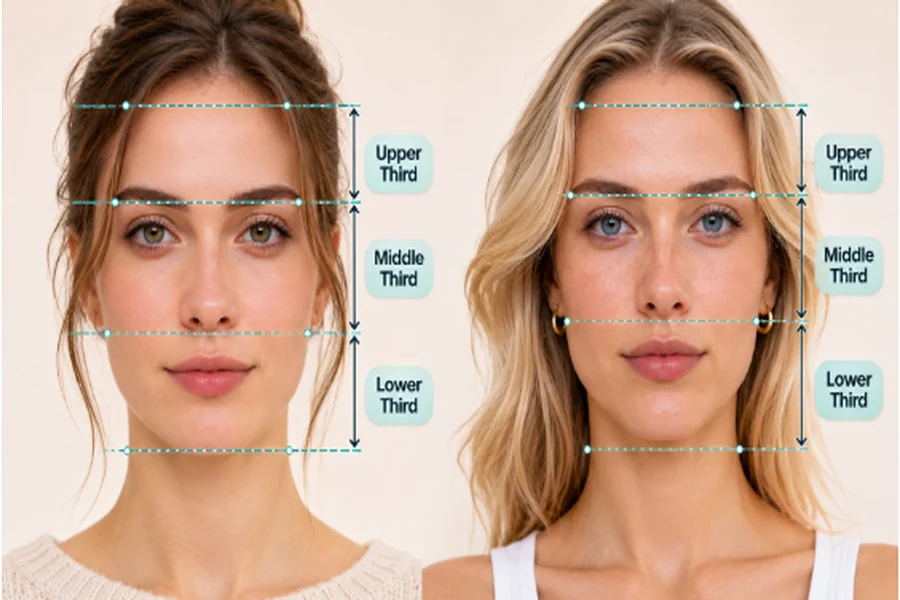
Facial Thirds
Facial thirds divide the face vertically into three approximate regions:
- Upper third: Hairline to eyebrow region.
- Middle third: Eyebrow region to the base of the nose.
- Lower third: Base of the nose to the chin.
Although similar proportions appear in classical aesthetic frameworks, natural facial structures vary considerably.
The Golden Ratio
The golden ratio, approximately 1.618, is a mathematical relationship frequently discussed in facial aesthetics.
Some analysis systems use it as a proportional reference. However, matching the golden ratio does not scientifically establish whether someone is beautiful.
Pretty Scale AI vs. Real-Life Beauty
An AI pretty scale evaluates a limited representation of your appearance. Real-life attractiveness involves considerably more than facial geometry.
Personal preferences, cultural influences, facial expressions, grooming, fashion, personality, and emotional connections all influence perceptions of beauty.
Someone whose features differ from conventional aesthetic proportions may still be considered attractive. Likewise, a high AI beauty score does not guarantee universal appeal.
Beauty standards also change across generations and cultures. Algorithms cannot fully account for these differences or individual preferences.
The same limitations apply to PSL ratings, facial attractiveness calculators, and other numerical appearance assessments.
Using Your Beauty Score for Practical Self-Discovery
Rather than pursuing a particular attractiveness score, use facial analysis to explore styling choices that suit your natural features.
Understanding your face shape can help you experiment with hairstyles, accessories, and makeup techniques. Exploring facial proportions may also explain why certain haircuts or glasses create different visual effects.
You can also improve your photography skills by experimenting with softer lighting, camera distances, and relaxed expressions.
Personal grooming, adequate sleep, skincare, and comfortable styling choices can support well-being and self-confidence.
The goal is not to change your features to satisfy an algorithm. It is to discover presentation choices that reflect your personality and preferences.

Privacy, Safety, and Fairness in AI Beauty Tests
Before uploading facial photographs, review the platform’s privacy policy to understand how images and analysis results are handled.
Only upload photographs you have permission to use, and avoid rating other people’s appearance without consent.
AI facial analysis systems may also reflect biases associated with their development, analytical criteria, and underlying data. Results should not be considered universally applicable across demographic groups or cultural backgrounds.
Final Thoughts
So, how pretty are you? AI beauty tests can help you explore measurable facial characteristics, but they cannot capture everything that makes someone attractive.
Understanding your facial features can support informed styling decisions and personal expression. However, lasting self-confidence should not depend on an algorithm’s assessment.
Use facial analysis as a starting point for curiosity and self-discovery, not as a beauty standard you need to meet.