
The 20-Minute Money Check-In: A Practical Personal Finance Routine for San Francisco, California
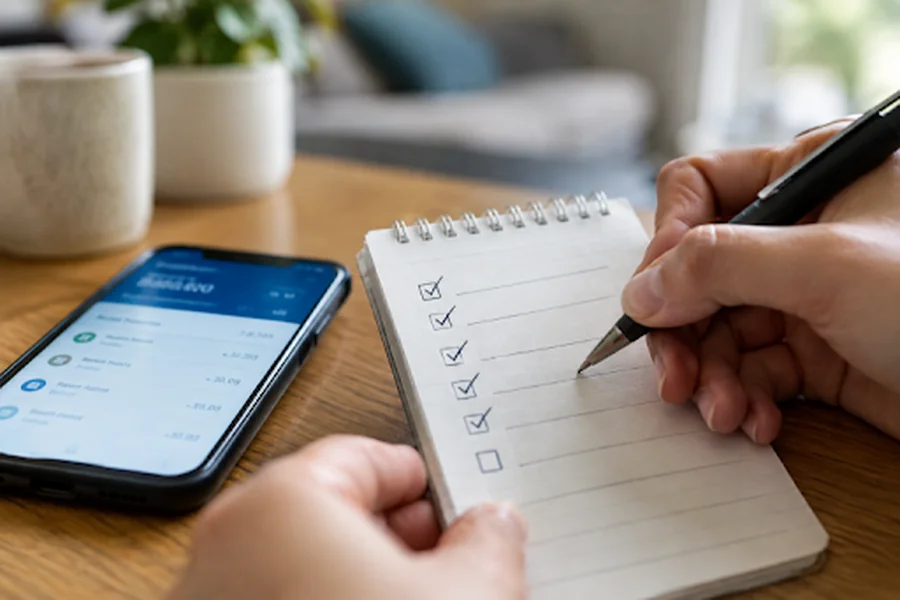
Life in San Francisco, California can make money decisions feel constant. Rent, transit, groceries, shared household costs, childcare, student loans, and savings goals may all compete for attention. A brief weekly review creates a quieter moment to see what is due and what needs to change before a small issue becomes more stressful.
You do not need a complicated spreadsheet or a strict daily budget to get started. A notebook, a banking app, or an AI financial advisor can help organize questions and next steps, but the most important part is setting aside consistent time to look at the full picture.
Why a Short Money Check-In Can Help
Large financial overhauls are easy to postpone. A 20-minute check-in is smaller and more realistic. It can help you notice a low balance before an automatic payment clears, spot a charge you do not recognize, or remember an annual bill that is not part of the usual monthly routine.
Small reviews also keep goals visible. Rather than trying to fix every spending category at once, choose one useful adjustment, such as moving a modest amount to savings, reducing takeout for a week, or calling a provider about a recurring charge. The federal guidance on making a budget also starts with practical information such as bills, expenses, income, and savings goals.
What to Gather Before You Start
Keep the process simple by having a few essentials nearby:
- Current checking, savings, credit card, and payment app balances
- Upcoming bills and their due dates
- Pay information or a reasonable estimate of expected income
- Debt balances, minimum payments, and interest rates if available
- Savings and investment account balances
- A note-taking app, paper checklist, or basic spreadsheet
The 20-Minute Money Check-In
Minutes 1 to 4: Review Current Balances
Open the accounts you use most often. Check available cash, savings, credit card balances, and recent payment app activity. Look for unfamiliar transactions, duplicate charges, or purchases that were larger than expected. Then compare the amount in checking with the date of the next paycheck or income deposit.
Minutes 5 to 8: Scan Upcoming Bills
List every payment due before your next income deposit. Include rent or mortgage payments, utilities, insurance, transportation costs, debt payments, and any shared expenses you need to reimburse. Confirm that automatic payments use the intended account, and set reminders for bills that must be paid manually.
Minutes 9 to 12: Review Recent Spending
Use broad categories instead of examining every purchase in isolation. Housing, food, transportation, health, debt, household needs, and personal spending are enough for many households. Ask whether an expense was temporary, recurring, necessary, or something worth adjusting next week.
Minutes 13 to 16: Check Savings and Debt Progress
Confirm that planned savings transfers and debt payments processed correctly. If extra cash is available, decide whether it has a more urgent purpose, such as protecting an upcoming bill, building an emergency cushion, reducing high-cost debt, or preparing for a known expense. The Consumer Financial Protection Bureau offers tools for cash flow, spending, bills, savings, and debt through its financial planning toolkit.
Minutes 17 to 20: Choose One Next Action
End with one specific task that can be completed soon. A clear next action prevents the review from becoming a list of worries without a plan.
- Cancel an unused subscription.
- Move a small amount into savings.
- Change a bill reminder or automatic payment date.
- Review an insurance renewal.
- Contact a provider about a recurring charge.
- Update a debt payoff target.
How Often Should You Check In?
Different reviews answer different questions. A weekly check protects near-term cash flow, while longer reviews help you adjust the overall plan.
| Review | Suggested Focus | Typical Tasks |
| Weekly | Immediate cash flow | Balances, transactions, bills due soon |
| Monthly | Spending plan | Income, spending categories, savings, debt |
| Quarterly | Recurring costs | Subscriptions, insurance, lifestyle changes |
| Yearly | Long-term planning | Tax records, retirement, beneficiaries, goals |
Ways to Make the Routine Easier
- Use the same day each week: A regular appointment reduces the need to decide when to begin.
- Keep categories broad: Simple labels are easier to maintain than a highly detailed system.
- Set account alerts: Balance and transaction notifications can give you an earlier warning of potential problems.
- Automate carefully: Automatic transfers and bill payments can help, but review them after any changes to income or expenses.
- Focus on one goal: A single meaningful adjustment is often easier to sustain than several major changes at once.
Common Mistakes to Avoid
- Checking balances without checking bills: Available cash can look sufficient until scheduled payments are processed.
- Planning around a perfect month: Include room for irregular costs, celebrations, repairs, and medical needs.
- Cutting every enjoyable expense: A plan with no flexibility may be difficult to follow over time.
- Ignoring small recurring charges: Review subscriptions and memberships periodically.
- Changing everything at once: One durable habit can be more valuable than several short-lived resolutions.
Example: A Check-In for a Busy San Francisco Household
A household checks its accounts on Sunday evening and sees that a utility payment, a credit card minimum, and an insurance premium will clear before the next payday. The household sets aside money for those obligations, postpones a nonessential purchase, and keeps its planned savings transfer at a smaller amount. That is not a perfect financial month, but it is an informed decision that protects essential payments.
Questions Readers May Have
What if income changes from month to month?
Build the plan around a conservative income estimate, cover essential obligations first, and check in more frequently when income is irregular. During stronger months, allocate a direct portion of the difference toward savings, taxes (if applicable), upcoming expenses, or debt.
Should every purchase be tracked?
Not necessarily. Detailed tracking helps some people, while broad categories are enough for others. Use the level of detail that gives you useful information without making the routine too difficult to continue.
Should savings or debt come first?
The answer depends on the type of debt, its cost, the risk of an emergency, and the cash needed for essential bills. When circumstances are complex, a qualified financial or tax professional can provide guidance tailored to your situation.
Keep the Routine Small and Repeatable
A money check-in does not require a weekly financial reset. Reviewing balances, bills, spending, savings, and debt for 20 minutes can provide a clearer view of what deserves attention. For San Francisco households, the best routine is the one that fits real life, adapts when costs or income change, and ends with one practical next step.